
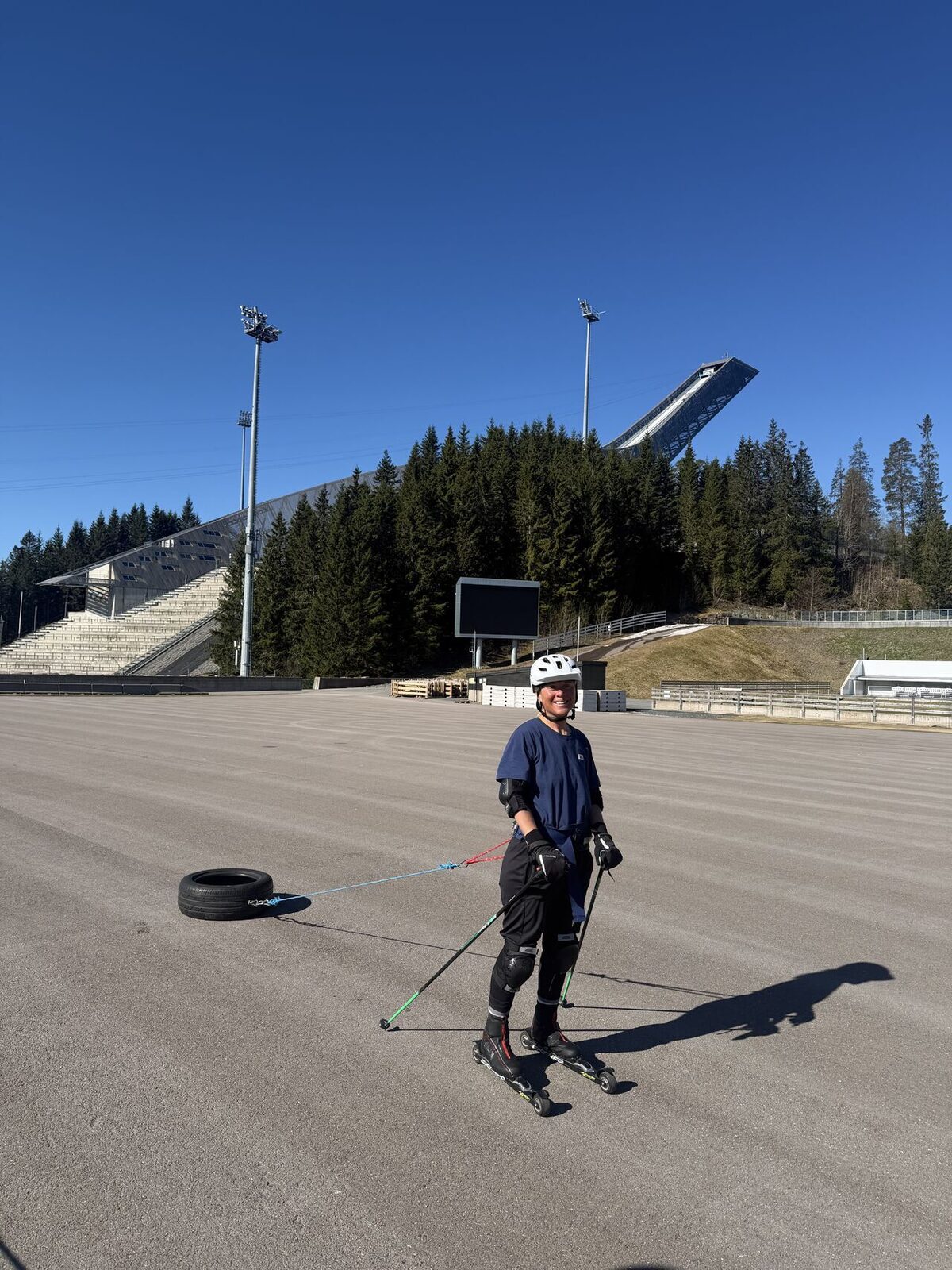
I had never cross-country skied before, and only ever skied a couple of times very hesitantly as a kid, so the first thing I had to learn was to ski! I’ll still need a lot more practice before we go. My first time on skis was six days of hut-to-hut backcountry skiing in northern Finland, pulling our equipment in sleds. I was in a group with three people from the Army and a Finnish leader who basically told us to follow him and keep up.
In February this year I spent two weeks training in Finse, Norway, a polar-training area, with Guinness World Record-holding polar guide Hannah McKeand. Hannah has completed six ski expeditions to the South Pole and, in 2006, set what was then the female speed record for a solo unsupported journey to the Pole and runs specialist polar survival training and polar expedition training courses.
That covered putting up tents in the snow, cooking safely inside a tent, navigation, equipment and clothing, and how to avoid sweating. The aim is to begin moving slightly cold rather than overdressed, because sweat freezes and can make you dangerously cold. We also learnt how to eat enough, often enough, and with the right balance of nutrients to maintain the energy needed to stay warm. This also included a seven-day training expedition with her to put it all into practice.
Then in April Ben and I did an eight-day training expedition back in the same area across Norway’s Hardangervidda, dragging 40 kg pulks (sleds) including through a whiteout and a blizzard, followed by some much-needed ski coaching.
I am not a natural skier, but from now until we leave, much of the answer is simply more time on skis. The coaching focused on moving more efficiently so we use less energy, which makes a big difference over thousands of kilometres.
We also went to Chamonix for crevasse-rescue training with ALE’s crevasse expert to learn how to see the signs of where there may be crevasses and know how to climb out of one if we do fall in. One of the requirements to be approved by ALE for our route is to demonstrate that we have climbed out of a crevasse and can carry out a crevasse rescue. We will return next September for a refresher for several more days being lowered into crevasses and climbing back out with the hope that we are less likely to panic and more likely to remember what to do if we ever fall in one.
Most of the rest of the training now is dragging tyres and in the gym. I’m a lot smaller than Ben, so I need to build more strength and muscle to compensate. I have two PT sessions a week, train in the gym and walk around wearing a 20 kg weighted vest. From now on, per the instructions of the experts, I need to start spending my weekends dragging tyres for 8 hours each day, because dragging tyres is one of the closest ways to imitate hauling a sled when there is no snow. So that will take up most of my weekend and will mean a lot of time alone with audiobooks and podcasts.
Four of the exercises my PT gives me are also in HYROX, so I let myself get talked into doing one of those as well. It gamifies the training and makes the gym sessions a bit more fun. Ben lives in Scotland so gets out into the mountains there to train.