
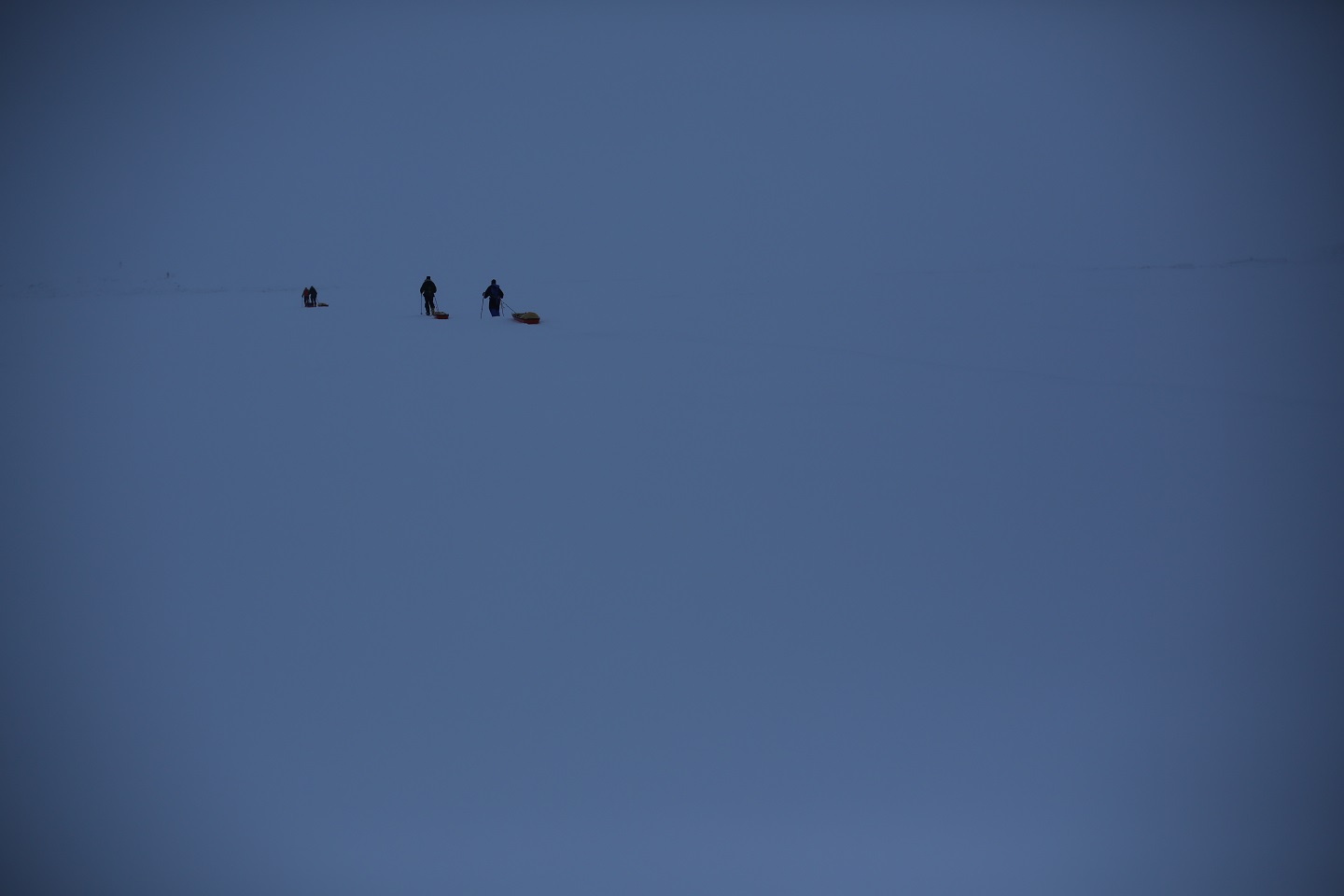
So we have less than two years until our planned journey. Sounds like a long time? Definitely isn’t! Plenty to do in the meantime, and much of it is based around polar training and getting ready for the conditions we will face.
Erica has just had some time skiing in Lapland – her first time in polar conditions, and first time skiing! Talk about a baptism of fire (and ice!), especially being up there during the Arctic winter! Training in the Arctic winter is difficult and I think it is a fantastic way to prepare both physically and mentally as the conditions can be much tougher than the conditions in the Antarctic summer. Okay, we will obviously be cold when we get to Antarctica. Temperatures will get down to -40C or colder, especially up on the Antarctic plateau. We’ll also have crevassing to worry about on parts of the ex. And the Antarctic winds can (and will!!) be vicious. But one thing in Antarctica summer will be very very different: we’ll have 24 hours of sunlight per day.
I will let Erica talk about her time up in the north – it sounded like a terrific time and I was pretty jealous of her being there. It reminded me of my polar training back in 2014, and subsequent journeys in Arctic Canada, up on the Hudson Bay and Baffin Island, and how they all helped me get ready for my Greenland and South Pole journeys.
The darkness of winter
The darkness… you always need headlamps in the tent to see what you’re doing. These also need battery power. At the same time, it is extremely hard to get much light to recharge any of your batteries with solar power. And, at the same time.. it makes it so so hard to dry thing: Despite it being so cold, you get wet as when you’re pulling so much weight with the sled, your body is working so hard, so you sweat. Even as you sleep, if you are too warm in the big sleeping bag, you will sweat a little. And even a little is too much, especially considering 60-90 day expeditions.
In the words of my polar training instructors, Sarah and Matty McNair at Northwinds: “If you sweat, you die!!” Your clothes get damp, and that allows the heat from your body to be transported away quicker than otherwise. The moisture from any sweat as you sleep stays in the sleeping bag and can’t escape, so it builds up, so your sleeping bag gradually gets heavier and damper over time. Nightmare! You have to have vapour-barrier liners to keep all the moisture in around you and not let it get into the fabric of anything.

The joys of summer
In Antarctica, with the light, solar panels are amazing: I had two power banks with me for my South Pole journey, with one as a backup. I only needed to use one of them as it was easy to keep charged. I would leave it recharging in the tent as I slept, even on cloudy “nights”. Then drying things… okay, when it was cloudy it would be colder in the tent, but when it was clear, it would get nice and warm there and things would dry out so quickly. At one point on the plateau it was -40C outside the tent and literally 20C inside – it’s basically like a greenhouse, and it seemed like paradise! (Well, relatively speaking!)
Ultimately, in getting ready for Antarctica and in our polar training, we have to be prepared to be completely out of our comfort zones, in extremely harsh and difficult conditions, and to be able to operate easily within those conditions. So Arctic training is absolutely perfect!




Leave a Reply